
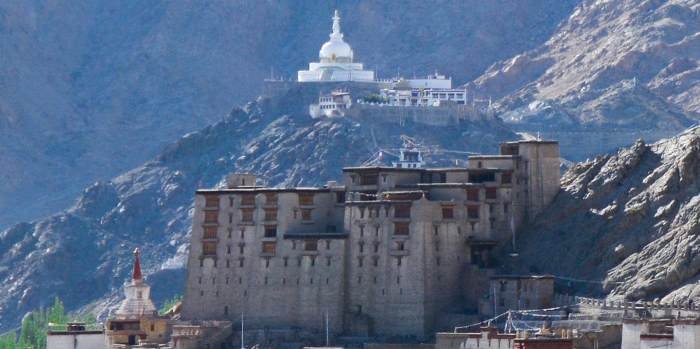
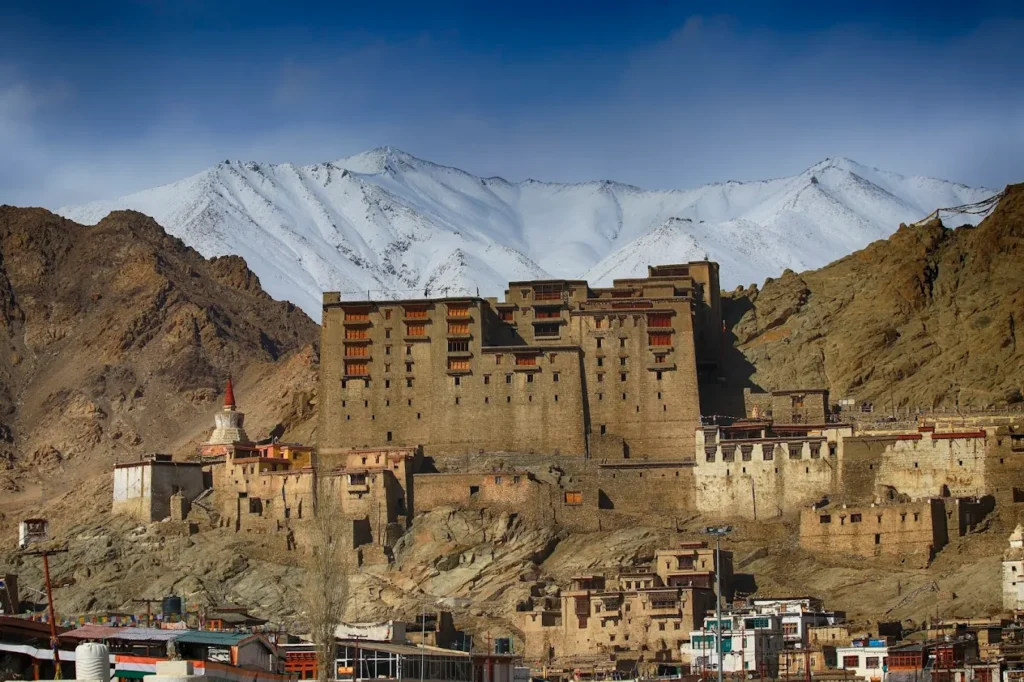
Leh Palace is one of the most important historical landmarks in Ladakh, overlooking the town of Leh from a hilltop. The construction of the palace began in the 16th century by Tsewang Namgyal and was later completed in the 17th century by Sengge Namgyal. For many years, Leh Palace served as the royal residence of the Namgyal dynasty. However, during an invasion by Dogra forces in the 19th century, the palace was heavily damaged. After the attack, the royal family moved to Stok Palace. Today the palace still stands as an important heritage structure, though parts of it remain in a weathered condition. Restoration and preservation work is currently carried out by the Archaeological Survey of India. Leh Palace is a fine example of traditional Ladakhi-style architecture. The structure has nine floors and was built using natural materials such as wood, mud, sand, and stone. The lower floors were mainly used as stables and storage areas, while the upper floors served as living quarters for the royal family. The design focuses more on functionality than decorative elements. Mud walls help keep the rooms warm during winters and cool in summers, wood acts as insulation to reduce heat loss, and sand is used as a binding material between stones. The palace is uniquely constructed on a sloping hill, supported by strong buttressed walls 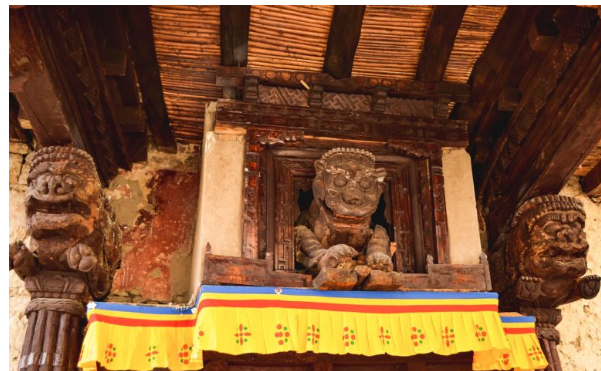
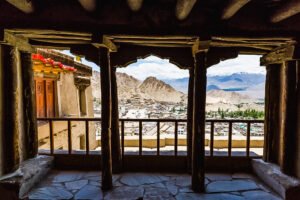
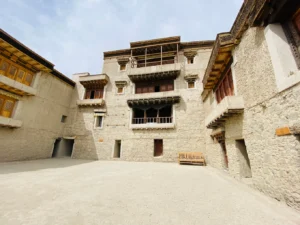
The main entrance to the palace is located on the third level, which visitors reach by walking along a cobbled path from the parking area. The entrance features wooden pillars and carved lion figures decorated with traditional Ladakhi fabrics. Inside, the palace consists of narrow corridors and small interconnected rooms with low doorways. Many of these rooms have been converted into exhibition spaces displaying historical artifacts, murals, and paintings, some of which are several centuries old. Large windows from the palace offer panoramic views of Leh town and the Polo Ground below.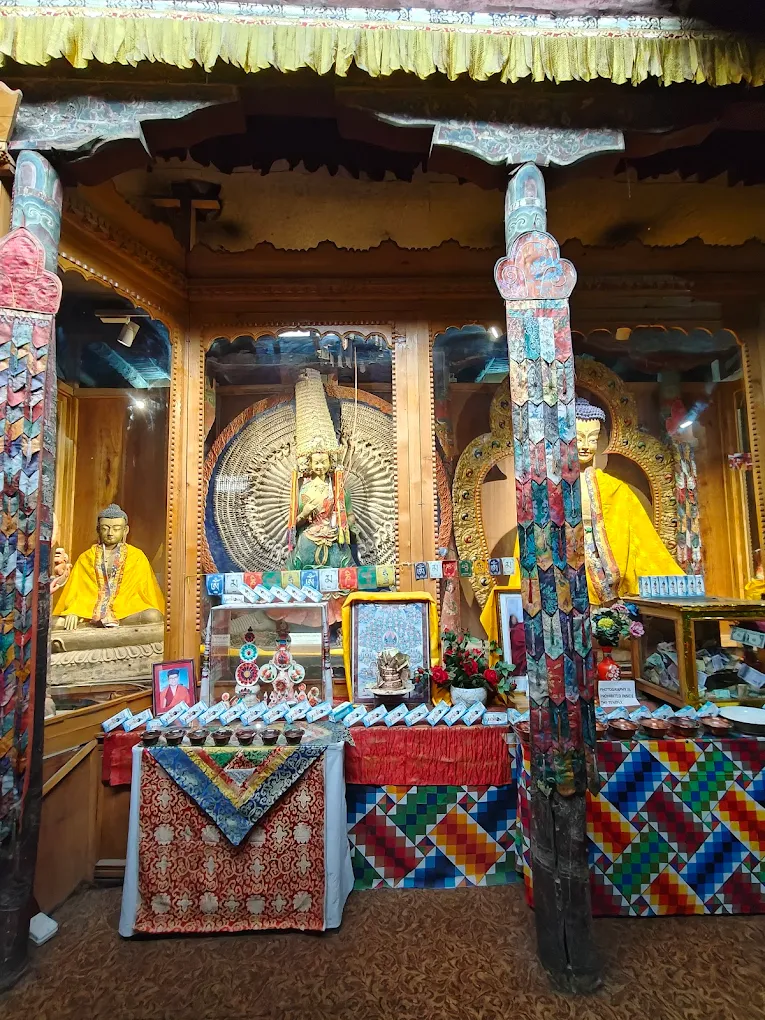 As visitors move through the palace, they come across open courtyards, geometrically designed windows, and overhanging balconies decorated with prayer flags. One of the important spaces inside the palace is Duk-Kar-Lhakhang, a temple once used by the royal family for worship. The temple houses a statue of Buddha along with ancient religious texts and scriptures. There is also a hall that once served as the Hall of Public Audience where the king met officials and visitors. Today this hall is used as an exhibition gallery displaying historic murals and artifacts.
 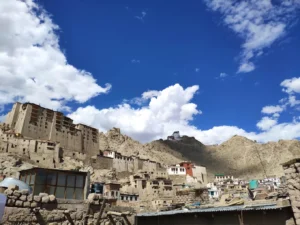 Higher levels of the palace provide increasingly spectacular views of the surrounding landscape and the city of Leh. From the upper courtyards, visitors can also see Tsemo Namgyal Castle, a historic fortress built in the 16th century by Tashi Namgyal. The topmost floors of Leh Palace are partially damaged and currently closed to visitors, but they are believed to have been used as private royal rooms.
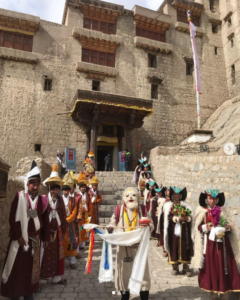
The Dosmoche Festival is one of the most important and unique cultural celebrations held in Leh. it is celebrated every year in February, marking the end of the Tibetan New Year festivities. The festival mainly takes place at the historic monasteries of Leh Palace and Likir Monastery and attracts both locals and visitors who come to witness Ladakh’s vibrant traditions. 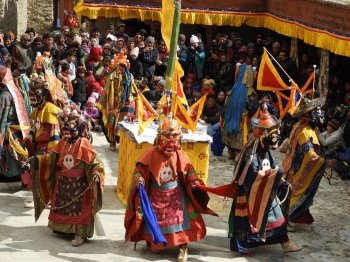
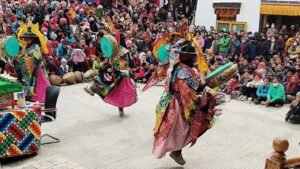
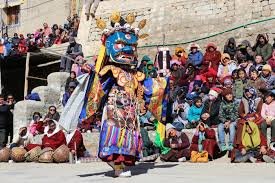
The origins of the festival date back to the reign of Ladakhi kings who introduced it as a ritual to drive away evil spirits and ensure peace, prosperity, and protection for the region. During the festival, monks perform sacred rituals and prayers intended to remove negative energies from the community. One of the most fascinating highlights is the Cham dance, where monks wearing colorful robes and elaborate masks perform symbolic dances in monastery courtyards. These dances represent the triumph of good over evil and are deeply rooted in Tibetan Buddhist traditions.
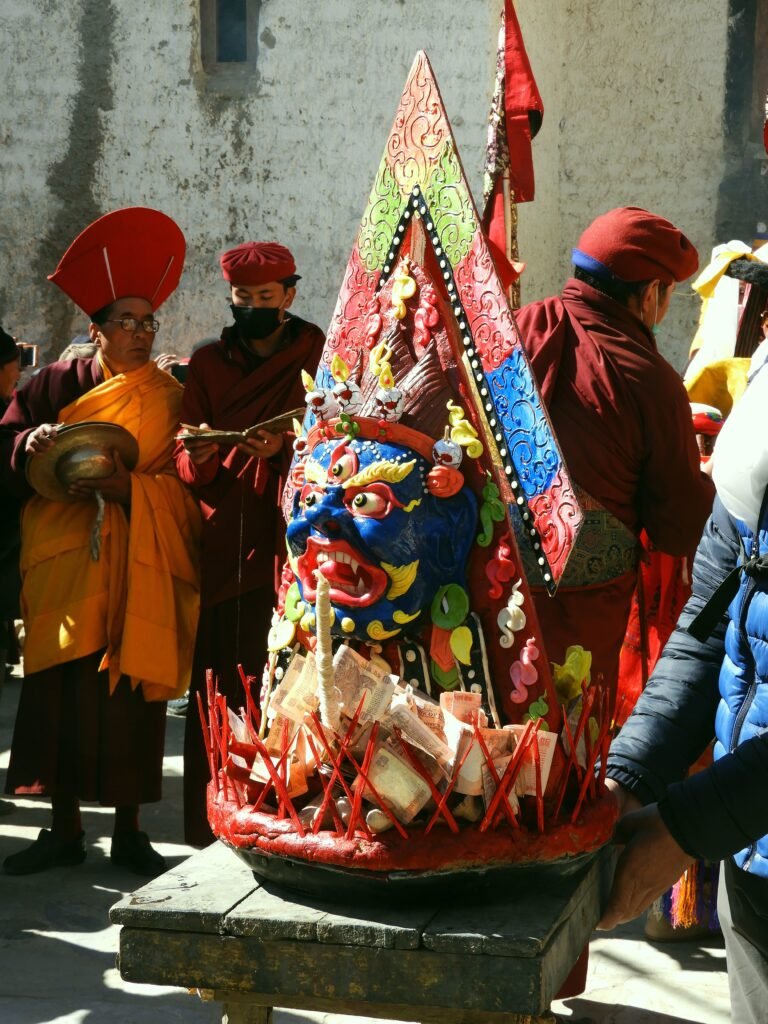
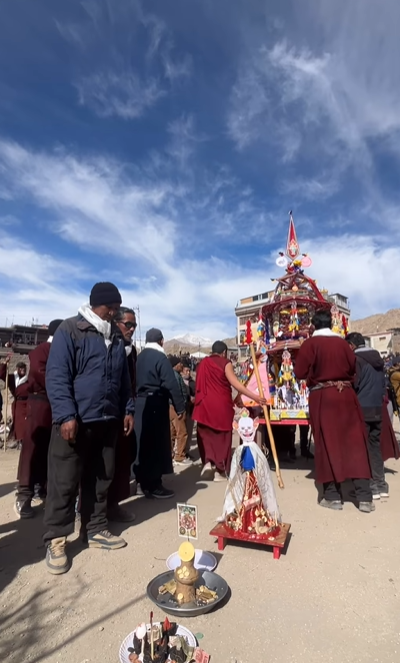
Another significant ritual of the Dosmoche Festival involves the creation of a sacred effigy made from dough, thread, and other ritual materials. This effigy symbolically carries the misfortunes and negative forces of the community. At the end of the festival, it is taken away and destroyed outside the town, symbolizing the removal of evil from the region. Apart from the religious ceremonies, the festival also becomes a lively social gathering for the people of Ladakh. Locals gather in traditional attire, markets become more active, and visitors get the opportunity to experience Ladakhi culture, music, and hospitality. The vibrant atmosphere, colorful masks, and spiritual rituals make the Dosmoche Festival one of the most fascinating winter festivals in Ladakh.
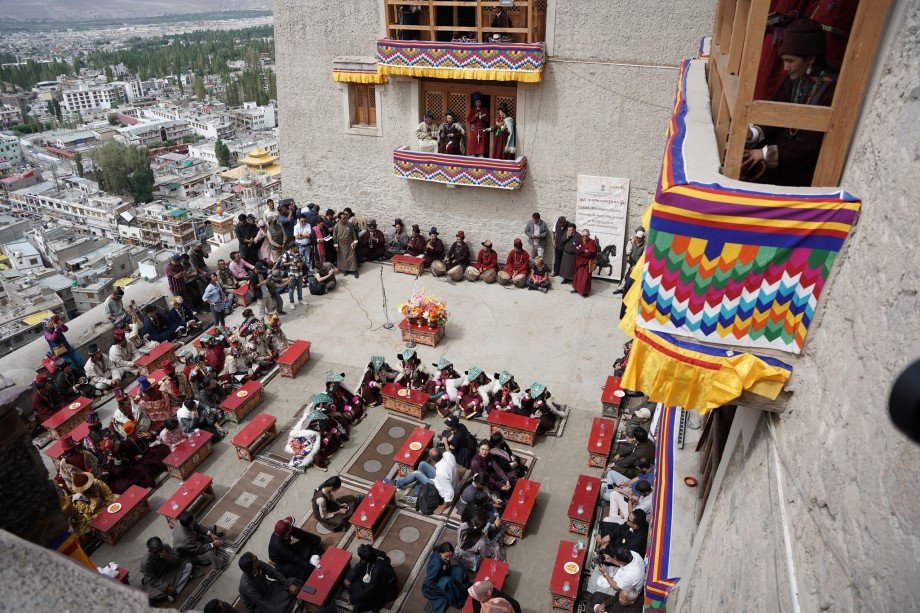
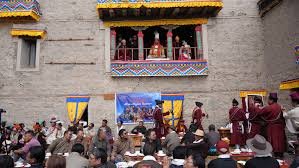
The Dpal Rngam Duston is a festival celebrated in Leh, mainly around the historic Leh Palace. The festival is associated with the royal heritage of Ladakh, The festival also highlights the historical importance of Leh Palace as the former residence of the Ladakhi kings. Locals and visitors gather to witness the rituals, cultural performances, and traditional celebrations, making Dpal Rngam Duston an important cultural event that preserves the spiritual and historical traditions of Ladakh