
CONCEPT NOTE
Himalayan Buddhism (often called Tibetan or Vajrayana Buddhism) is a distinct, esoteric form of Mahayana Buddhism practiced across Tibet, Bhutan, Nepal, and the Indian Himalayas. Himalayan Buddhism has profoundly contributed to the spiritual, cultural, and intellectual landscape of Asia by acting as a “living repository” for ancient Indian traditions. Beyond its religious role, it has shaped the region’s identity through unique art forms, a rigorousmonastic education system, and a philosophy that prioritizes environmental harmony and universal compassion.
It combines 8th-century Indian Tantric teachings (brought by Guru Padmasambhava) with local traditions, emphasizing rituals, mantra recitation, visualization, and guidance from a Lama.
It forms the backbone of Leh, Ladakh’s spiritual and cultural identity, blending Indian Mahayana and Vajrayana traditions into a unique, daily way of life. Centered on historic, high-altitude monasteries (gompas), this heritage features vibrant festivals, profound monastic education, and artistic traditions that promote peace, compassion, and harmony with nature. It is the very foundation in deeply shaping its identity through iconic monasteries (gompas) likeHemis, Thiksey, Alchi in Leh, Ladakh. India’s massive Tawang Monastery (Arunachal Pradesh), the ancient Tabo (Spiti) and Sikkim’s Rumtek, the seat of the Karma Kagyu lineage etc. which serve as centers for spiritual, educational, and artistic life. It influences daily life, art, music, and festivals, while promoting peaceful coexistenceand spiritual, moral values. Preserved in the extensive teachings of Buddha Dharma, combining with local cultural practices forms a unique, living tradition in the entire Himalayan region.
Key Points:
- Preservation of Ancient Heritage
- Textual Custodianship: When Buddhism declined in India between the 10th and 12th centuries, Himalayanregions—particularly safeguarded thousands of Sanskrit manuscripts that otherwise would have been lost.
- Translation Movement: Scholars translated these vast Indian scriptures into the Tibetan Kanjur and Tenjur canons preserving the intellectual foundations of the Nalanda tradition.
- Lineage Continuity: The region has maintained unbroken lineages of advanced meditation practices, as well as complex ritual traditions that date back over a millennium.
2. Cultural and Artistic Innovation
- Visual Arts: Himalayan Buddhism delivered distinct art styles, including Thangka (scroll paintings), Paubha(traditional Nepalese scroll art), and intricate bronze casting
- Architecture: The landscape is defined by iconic Gompas (monasteries), iconic monasteries (gompas) like Hemis, Thiksey, Alchi in Leh, Ladakh. India’s massive Tawang Monastery (Arunachal Pradesh), the ancient Tabo (Spiti) and Sikkim’s Rumtek, the seat of the Karma Kagyu lineage which serve as architectural symbols of spiritual and temporal authority.
- Rituals and Festivals: Events such as Saka Dawa (celebrating Buddha’s birth and enlightenment) and seasonal dance festivals (Cham) strengthen community ties and attract global spiritual tourism.
3. Intellectual and Ethical Systems
- Monastic Education: Monasteries function as universities for the study of logic, philosophy, medicine (Sowa Rigpa), and astrology. Monasteries like Thiksey, Hemis, and Alchi are not just places of worship but centralpillars of social, educational, and spiritual They act as Centers for learning, meditation, and preserving ancient teachings. Monks serve as custodians of the culture, and the region is renowned for its preservation ofTibetan Buddhist practices.
- Philosophical Synthesis: The tradition successfully integrated Indian Madhyamaka philosophy with indigenous beliefs (like Bön), creating a robust “middle way” worldview.
- Compassion and Peace: Core values like Ahimsa (non-violence) and Karuṇā (compassion) have made the region a global hub for peace studies, with leaders like the HH Dalai Lamaji promoting secular ethics of Buddha Dharma.
- Special Theme – Spiritual Tourism and Global Significance: The region attracts visitors for spiritual solace, meditation, and learning, with the Dalai Lama holding high significance. The tradition continues to act as a bridge between the spiritual, social, and, in some cases, geopolitical facets of the region.
********
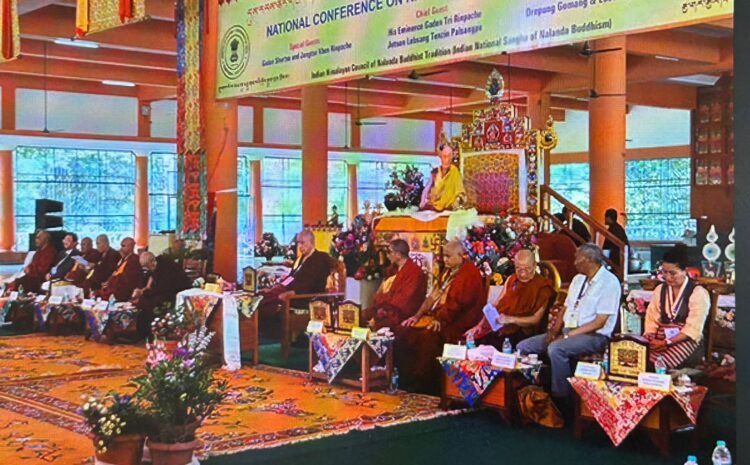
TENTATIVE PROGRAMME SCHEDULE
Sunday, 3 May 2026
Venue ” New Meditation Hall (First Floor) MIMC, Leh
|
09:50 |
All to be seated Arrival of Dignitaries |
|
10:00 – 10:05 |
Mangalapath by Venerable monks and lighting of the lamp |
|
10:05 – 10:10 |
Welcome Address by Shartse Khensur Rinpoche Jangchup Choeden, Secretary General, IBC |
|
10:10 – 10:20 |
Screening of IBC Film on “Sacred Buddha Relic Exposition in Nalanda Nations” (Mongolia, Russia and Bhutan) |
|
10:20 – 10:35 |
Special Address by Ven. Dorje Stanzin President LGA |
|
10:35 – 10:40 |
Address by Chief Guest H.E. Vinai Kumar Saxena, Hon’ble Lt. Governor of UT Ladakh |
|
10:40 – 10:50 |
Remarks by Most Venerable Bhikku Sanghasena, President of MIMC |
|
|
|
|
11:00 – 11:50 |
CONVERSATION – 1 Preservation of Ancient Heritage § Textual Custodians § Translation Movement § Linkage Continuity |
|
Moderator: H. E. Kunchok Rangdol Rinpoche, 3rd Khenchen of Drikung Kagyu Lineage, Dehrudun |
|
|
Speaker 1: Roger Kusang Nepal FNTV |
|
|
Speaker 2: Jetsunma |
|
|
Speaker 3: Claude Arpi |
|
|
Q&A |
|
|
|
|
|
12:00 – 12:50 |
CONVERSATION – 2 Cultural and Artistic Innovation § Visual Arts § Architecture (Monastic) § Rituals/Festivals |
|
Moderator: H.E. Gyeltrul Jigme Rinpoche; President and Chief, Rigon Thupten Mindroling Monastery (Padmasambhava Maha Vihara), Odisha |
|
|
Speaker 1: Geshe Lakhdor |
|
|
Speaker 2: Kaveri Gill |
|
|
Speaker 3: Jessie Hare |
|
|
Q&A |
|
|
|
|
|
13:00 – 14:00 |
LUNCH BREAK |
|
|
|
|
14:00 – 14:50 |
CONVERSATION – 3 Intellectual and Ethical System § Monastic Education § Philosophical Synthesis § Compassion & Peace |
|
Moderator: Lopen Lungtaen Gyatso, President, College of Language and Cultural Studies, Royal University of Bhutan |
|
|
Speaker 1: Palga Rinpoche |
|
|
Speaker 2: Dr. Jigmet Dorj, Sikkim |
|
|
Speaker 3: Kabir Saxena |
|
|
Q&A |
|
|
|
|
|
14:50 – 15:00 |
Special Speech on ‘Spiritual Tourism & Global Significance’ |
|
15:00 – 15:10 |
Cultural Performance by students of MIMC |
|
Concluding Remarks by Shri. Abhijit Halder, Director General, IBC |
|
|
|
|
|
15:15 |
HIGH TEA |
Venue Info
Mahabodhi Sambodhi Retreat Centre, Leh, Ladakh
View on Map