
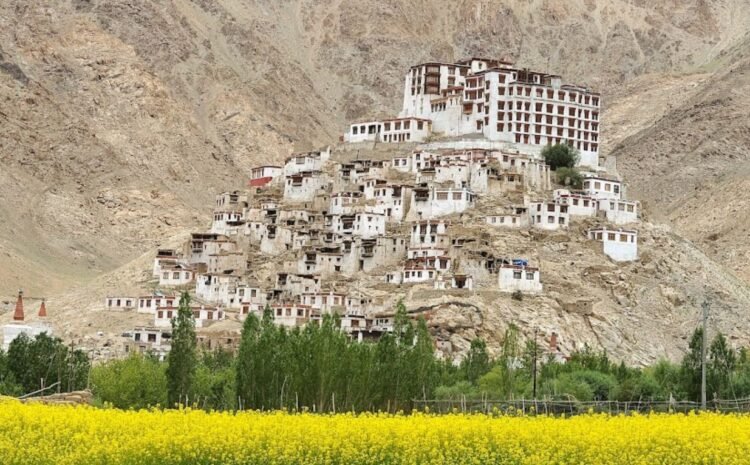
Chemrey Monastery
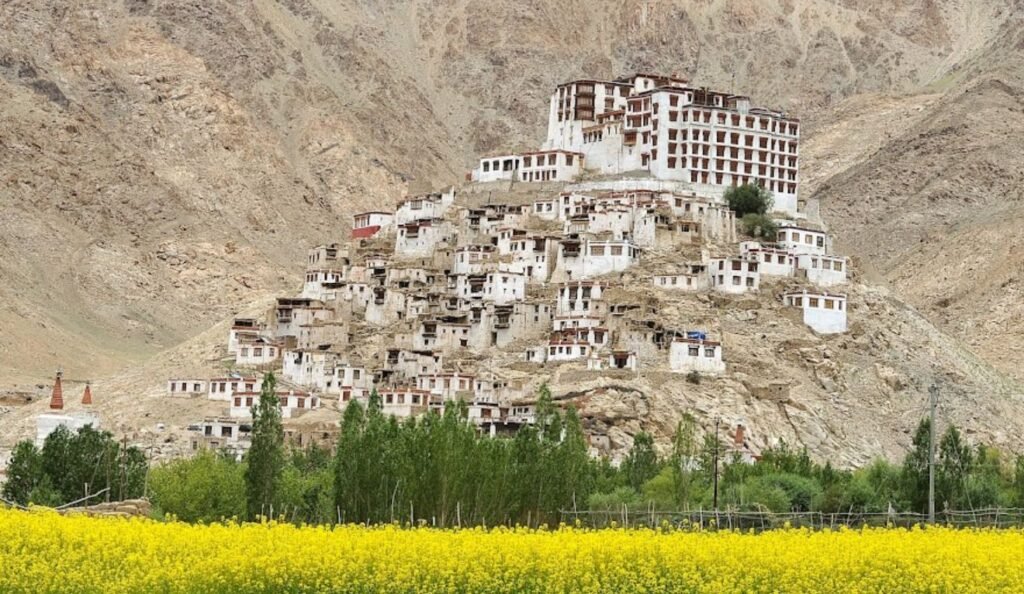
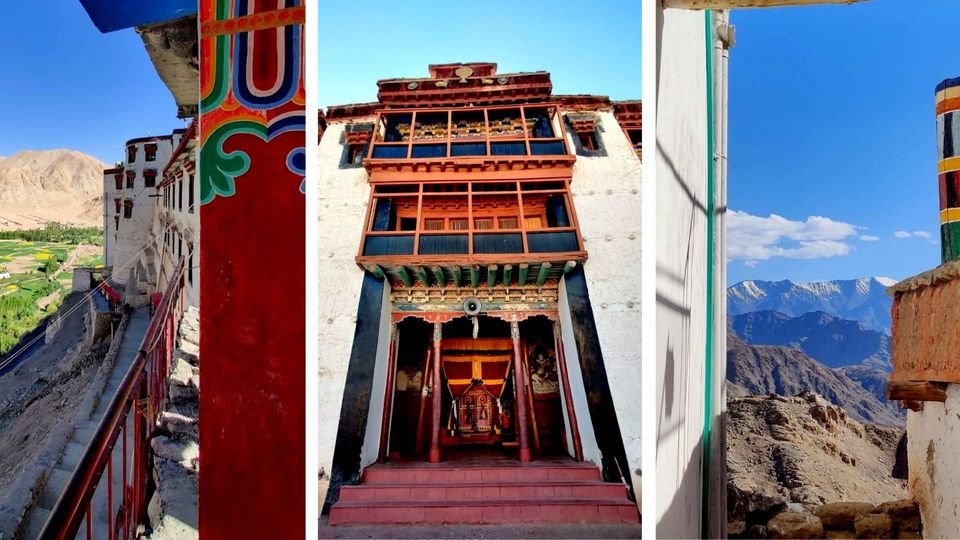
Chemrey Monastery is one of the most important Tibetan Buddhist monasteries in Ladakh. Situated about 40 kilometers east of Leh, this monastery sits atop a hill, affording an extraordinary view of the villages around it and the bleak, but beautiful landscape. It belongs to the Drukpa Kagyu sect of Tibetan Buddhism and acts as a spiritual centre for monks and devotees who visit this place to practice meditation and study the Buddhist teachings.
Chemrey Monastery is a place of worship, but at the same time, it symbolizes Ladakh’s deep connection to Tibetan Buddhism. It has a unique place in the hearts of Ladakhi people and the world visitors who seek refuge in the peacefulness of this sacred place.
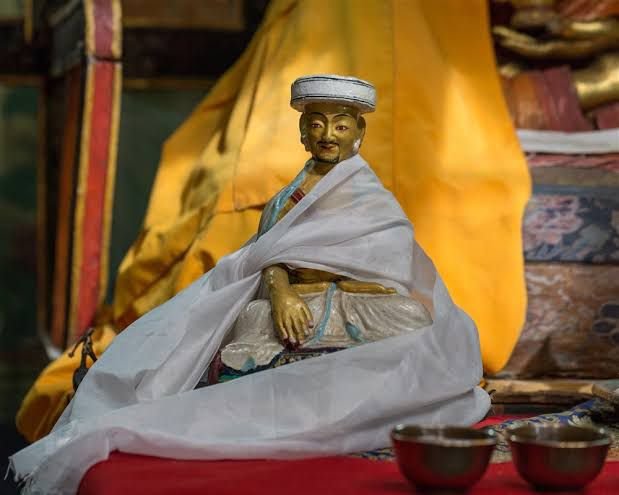
Chemrey Monastery originates from the 17th century. It was built by Lama Tagsang Raspa, one of the prominent lamas from Tibet. This lama was a direct disciple of Ngawang Namgyal, the great founder of Drukpa Kagyud sect. This monastery is built as a retreat center and as a place for the glorification of Buddha’s teachings with meditation, prayer, and study of Buddhist scriptures.
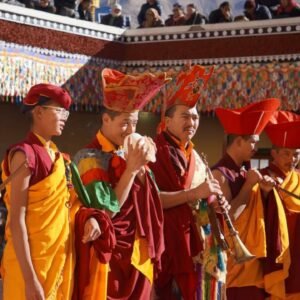
Throughout the years, Chemrey Monastery has served as the most important centre for teaching the Buddhist teachings within this area. It has passed through many difficulties in harsh climatic conditions, but the spirituality of the monastery never became weakened. The monastery is designed with traditional elements of Tibetan Buddhism to withstand the strong conditions and provide a quiet, serene space for the religious life of the monks.
Architecture of Chemrey Monastery
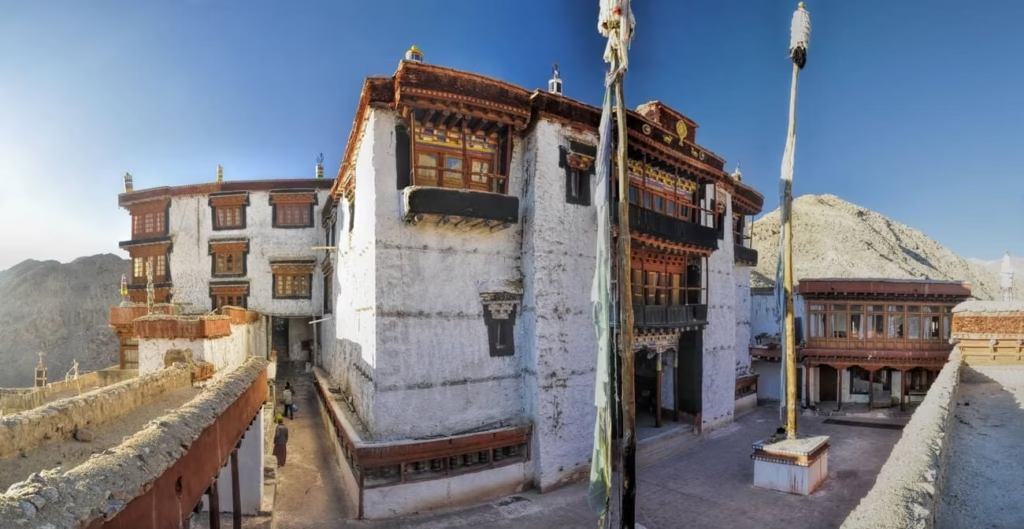
Chemrey Monastery represents a beautiful example of Tibetan Buddhist architecture. It stands atop a hill, thus giving one the view of the great valley and mountain. The monastery was built of stone and mud to ensure a perfect harmony between nature and this man-made construction that gives serenity for meditation.
Some architectural key features of Chemrey Monastery include:
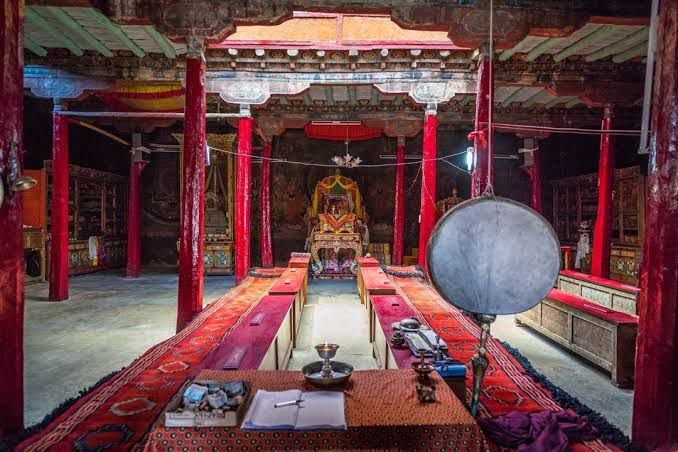
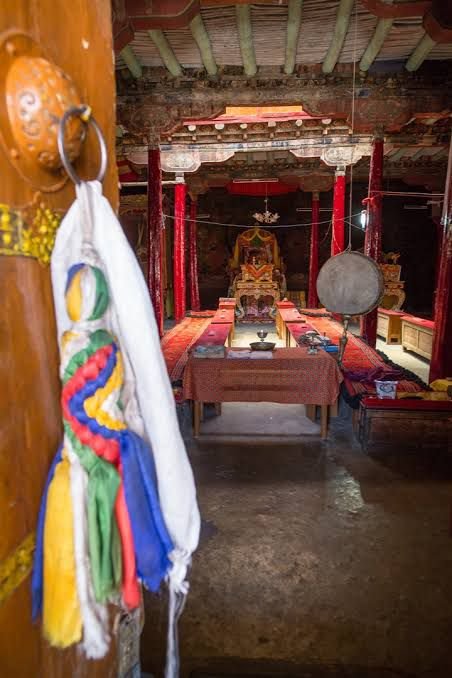
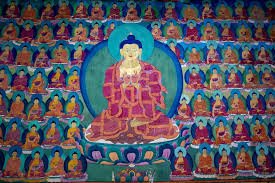
Main Prayer Hall (Dukhang): The prayer hall is, in fact, the nucleus of the monastery where people perform daily prayers, various rituals, and ceremonies. This prayer hall has large murals on the walls, decorating the life of Buddha and different forms of Bodhisattvas. It also has multiple large statues of important Buddhist leaders, including Padmasambhava, or Guru Rinpoche, who is most revered in Tibetan Buddhism.
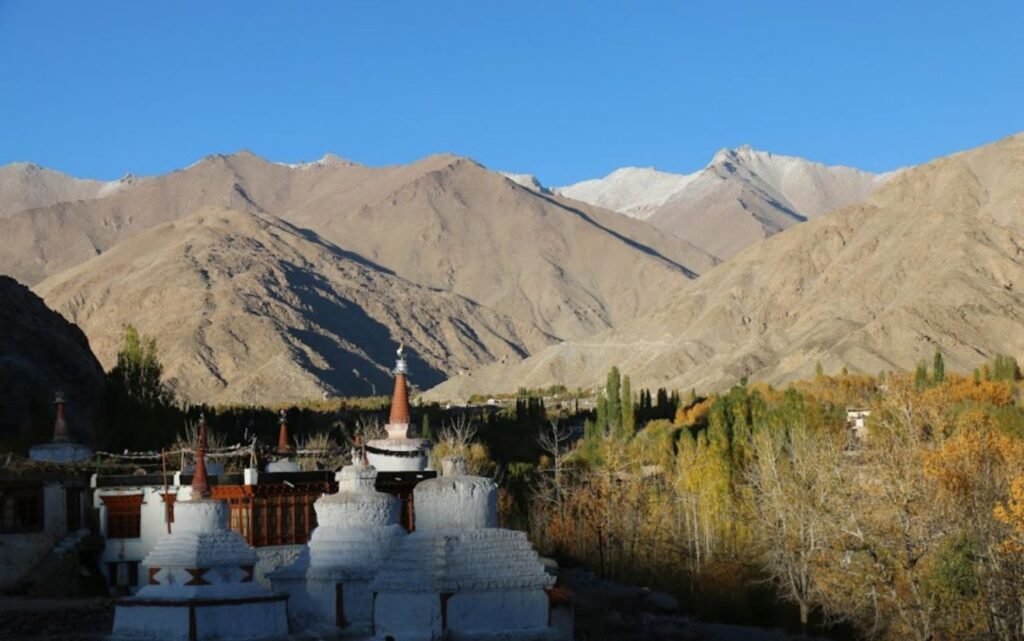
Chorten (Stupa): The monastery features a very significant structure, the Chorten, which is a Tibetan-style stupa symbolizing the Buddha’s teachings. Monks and devotees use the Chorten for meditation and circumambulation.
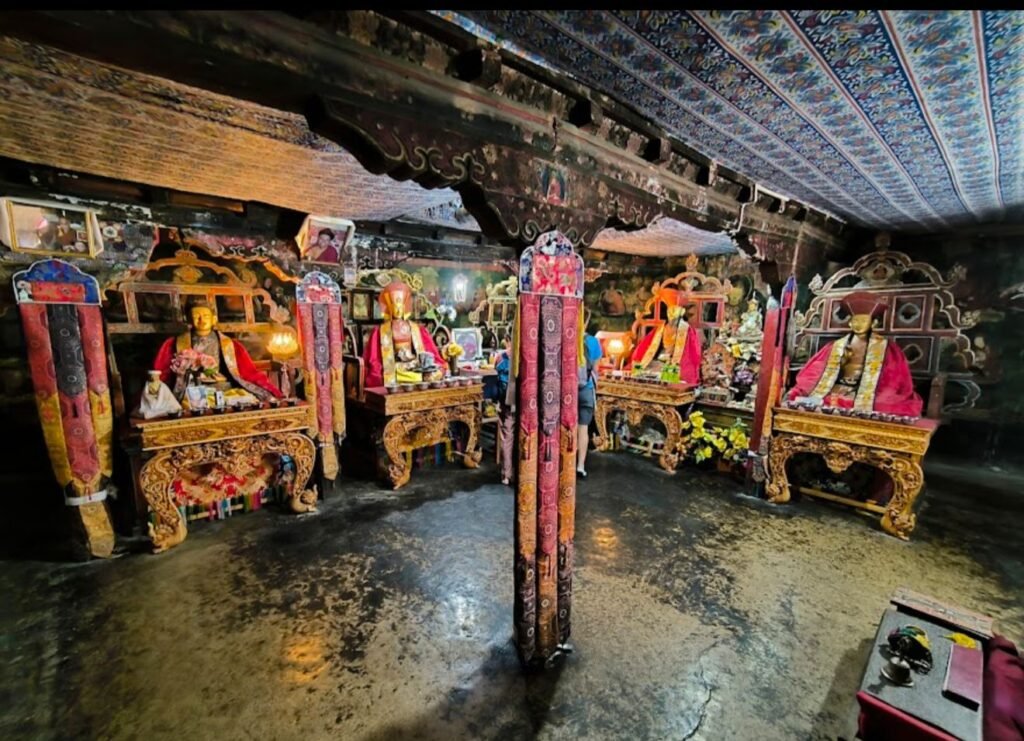
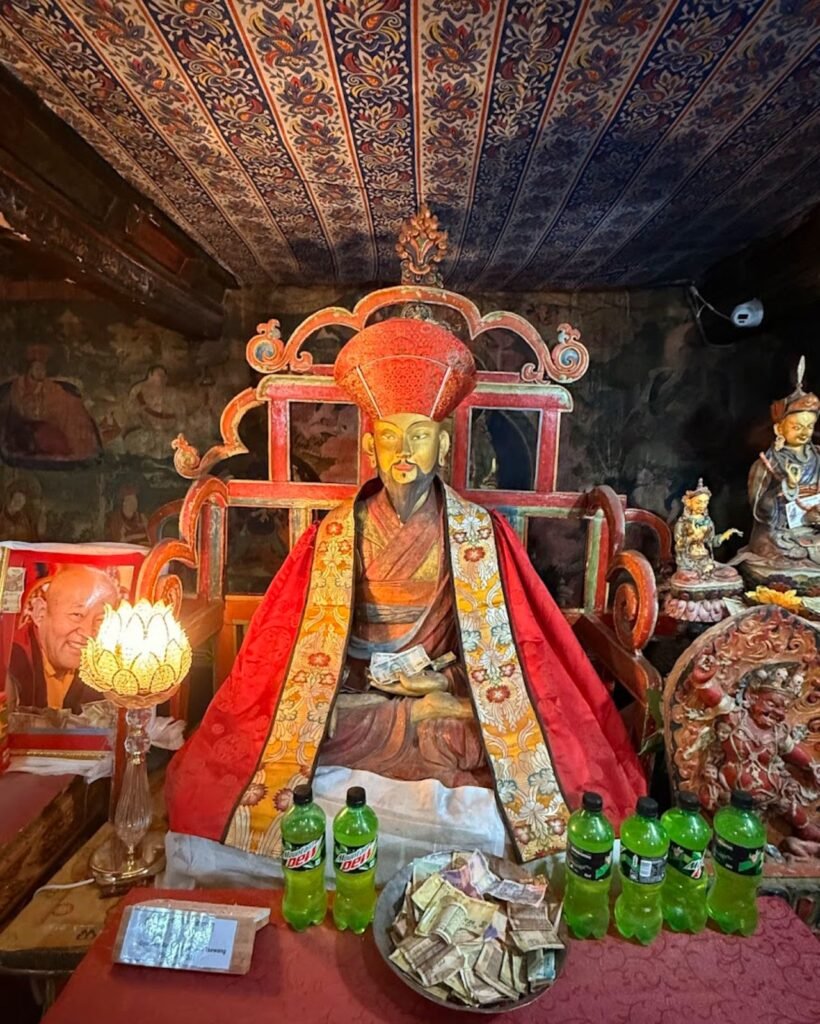
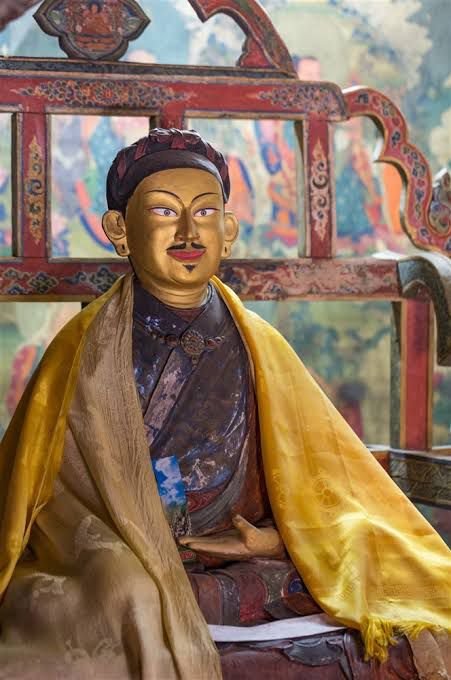
Meditation Rooms/lama lhakhang: There are several meditation rooms in the monastery where monks retire to practice silence and meditation. These rooms are located in quiet, secluded corners of the monastery, ensuring a peaceful and distraction-free environment for deep spiritual practice.
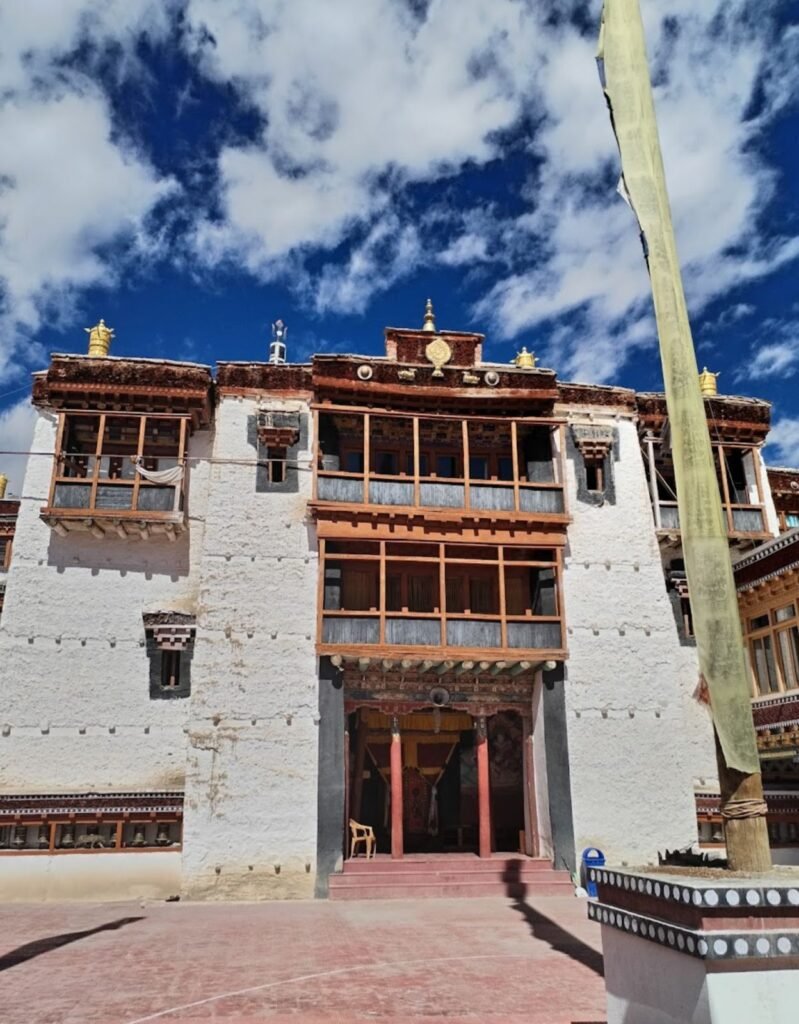
Monastic Buildings: The monastery complex houses the living quarters of the monks, where they engage in daily religious activities, study Buddhist texts, and offer prayers. The buildings are typically made with local materials, ensuring they blend with the natural surroundings.
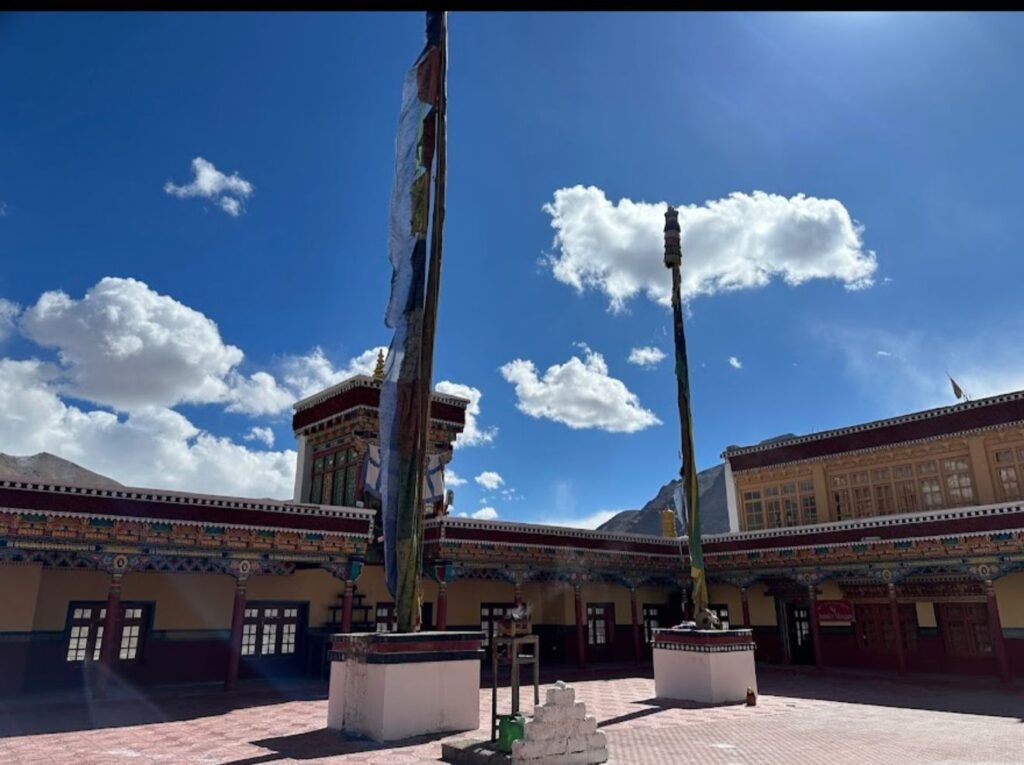
Courtyard: The monastery’s courtyard is where the monks and visitors come to gather. This is also where most of the monastery’s public ceremonies, festivals, and events take place. The courtyard gives a view of the bare Ladakhi landscape.
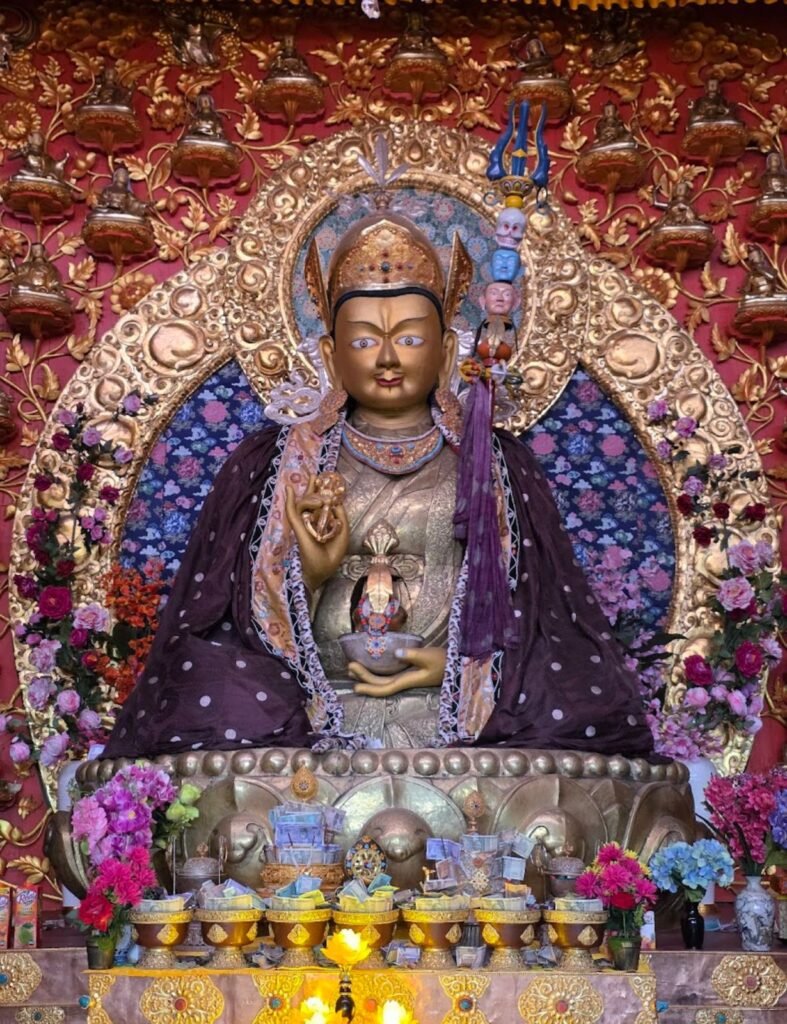
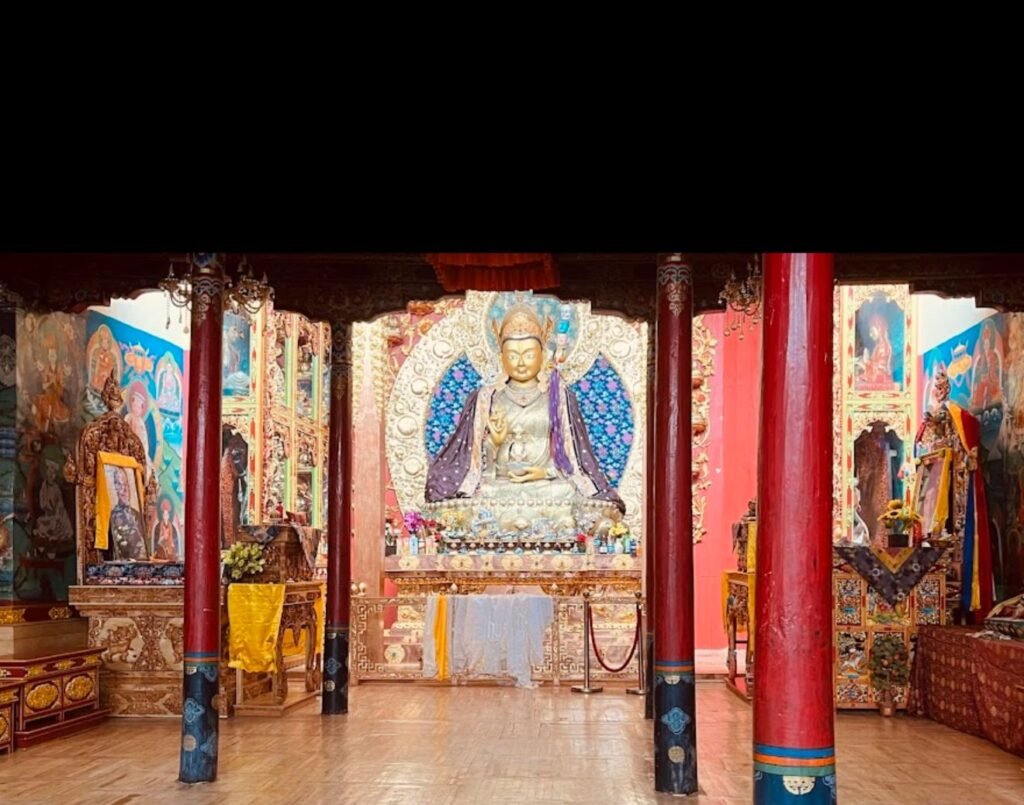
Statue of Guru Padmasambhava :
The main attraction of Chemrey Monastery is the impressive statue of Padmasambhava, also known as Guru Rinpoche. He is one of the most respected figures in Himalayan Buddhism and is often called the “Second Buddha” because he helped establish Buddhism in Tibet and the Himalayan region in the 8th century.
Details of the Statue
The statue is about 3 meters (around one storey) high, making it the largest and most striking image inside the monastery.
It is golden in colour and decorated with turquoise and semi-precious stones, giving it a rich and sacred appearance.
The statue is placed in the Guru Lhakhang (Guru Temple) inside the monastery.
It is often covered with silk brocade cloth and ornaments, which are traditional offerings in Tibetan Buddhist monasteries.
Religious Meaning
The statue symbolizes the teachings and spiritual power of Guru Padmasambhava. Pilgrims and monks visit this shrine to:
offer prayers and butter lamps, seek blessings and protection, remember the spread of Buddhism in the Himalayan region.
In short, the statue of Guru Padmasambhava in Chemrey Monastery is not only an important artistic and religious object, but also a symbol of the spiritual heritage of Ladakh and Tibetan Buddhism
Chemrey Monastery reflects the simplicity believed by Tibetan Buddhists to exist in spiritual serenity. The serene atmosphere of the monastery, coupled with its natural surroundings, presents a perfect setting for spiritual contemplation and self-improvement.
Spiritual Significance of Chemrey Monastery
Chemrey Monastery has a very important role in the preservation of the spiritual heritage of Ladakh. It is one of the most important Buddhist monasteries in the region and acts as a center for learning, meditation, and monastic life. The monastery has monks who spend their lives studying Buddhist philosophy, performing rituals, and guiding laypeople on their paths to enlightenment.
Chemrey Monastery is also an important destination for the pilgrims and tourists visiting to experience the spiritual feel of Ladakh. The peaceful abode offered by the monastery helps people disconnect from the modern world, and thus visitors can again get connected to their inner selves through meditation and contemplation.
Chemrey Monastery Festivals and Rituals
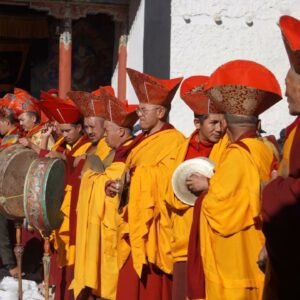
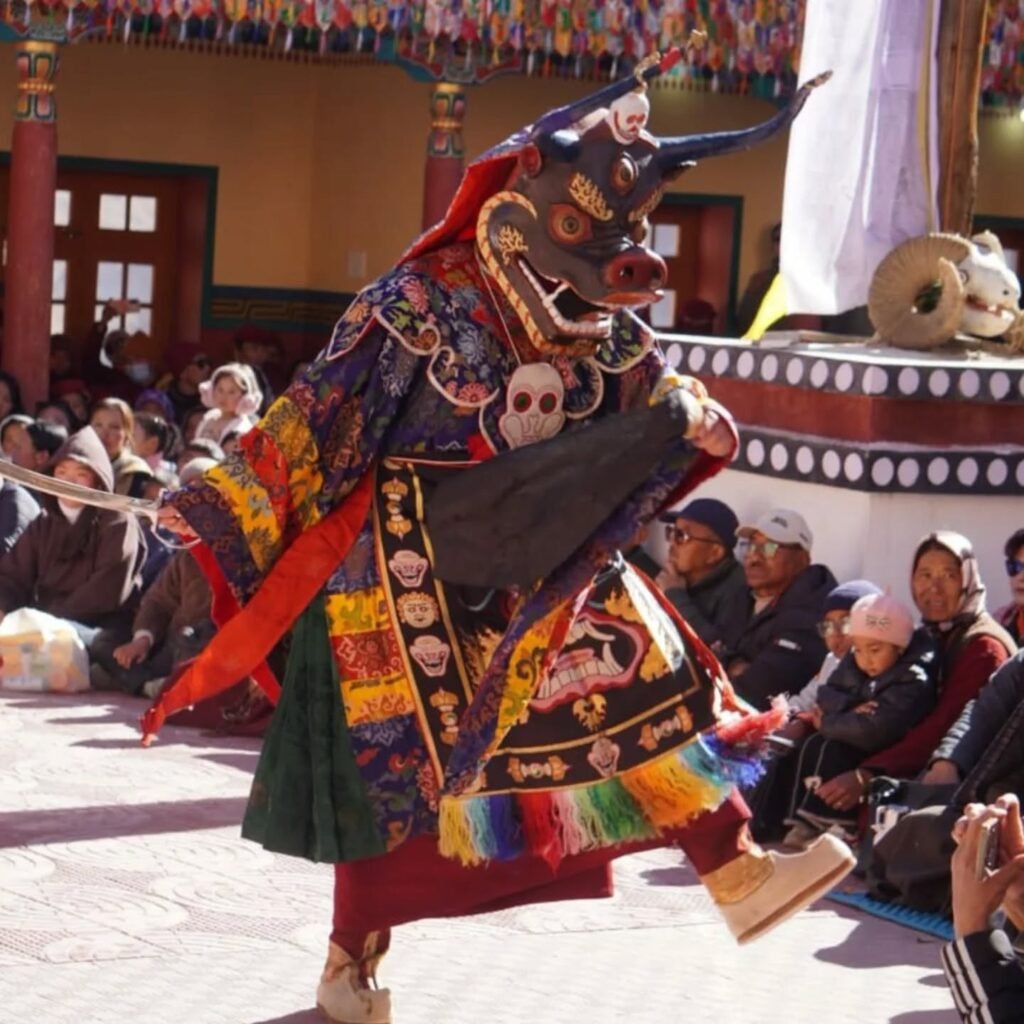
Ladakh is famous for its vibrant festivals, and Chemrey Monastery is not an exception. The monastery hosts various traditional Ladakhi and Buddhist festivals throughout the year. The most important of them is the Chemrey Angchok Festival., and it is one of the major festivals that attracts crowds from Ladakh to the entire region.
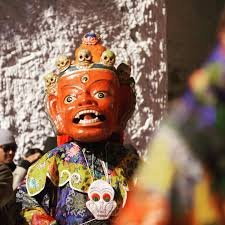
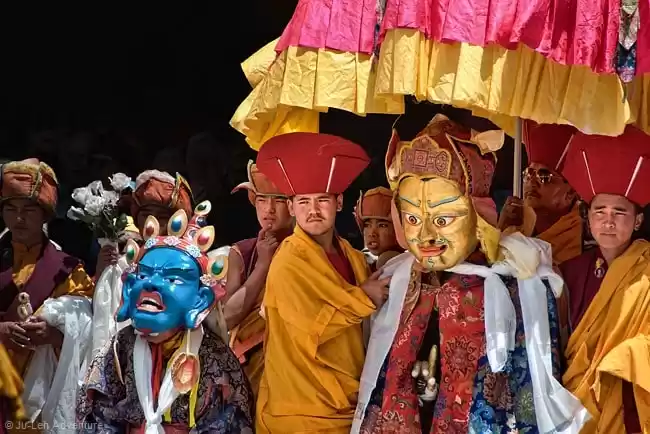
Chemrey Angchok Festival is a celebration of the Tibetan Buddhist calendar and is characterized by traditional rituals, music, dances, and performances. One of the highlights of the festival was the Cham Dance, a traditional Tibetan masked dance performed by the monks to ward off evil spirits and bring blessings to the region.
During the festival, visitors to this monastery enjoy all the colorful performances and rituals in the rich cultural and spiritual traditions of Ladakh.
.
Best Time to Visit Chemrey Monastery
The best time to visit Chemrey Monastery is during the summer months from May to September when the weather is pleasant and the roads are accessible. Ladakh winters can be very harsh as temperatures drop well below freezing, which makes travel difficult during the winter months.
However, if you are interested in attending the Chemrey Angchok Festival, then you should come to Ladakh in November or December. The festival, in fact, is not bad because of the colder climate as it offers a unique experience related to culture and spirit.